The compliance function at a mid-size private sector bank in Pune manages roughly fifty active policy documents. When RBI amended its Master Direction on Know Your Customer norms in 2025, the compliance team needed to identify which of those fifty documents were affected and review the relevant clauses. That process, just the identification and surfacing step, took one senior compliance officer three working days.
Three days to find the problem. Then more time to fix it. This pattern repeats every time a significant circular drops across any of the four regulators that Indian banks and NBFCs report to. Multiply this across the compliance calendar and you get a function that is constantly catching up rather than staying current.
The real question is not whether this process is inefficient. It obviously is. The question is which specific parts of the workflow can be automated without introducing new risk, and which parts require human judgment that no tool should substitute.
What a Policy Register Tracks and Why It Drifts
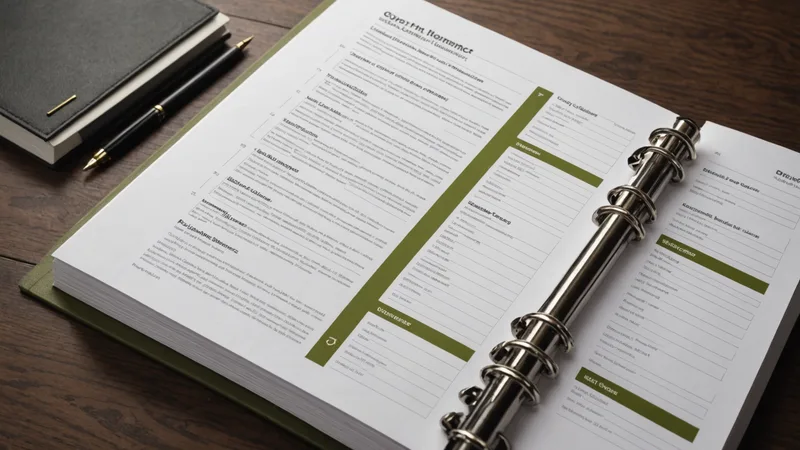
A policy register in an Indian bank is a structured reference document that maps regulatory requirements to internal policies, procedures, and controls. A typical entry links a specific provision in an RBI or SEBI circular to the bank's internal policy that addresses it, along with the policy owner, the last review date, and a compliance status indicator.
Registers drift for a predictable reason: they are updated reactively. When a new circular arrives, someone updates the affected entries. When nothing significant changes, entries sit untouched. After two or three cycles of partial updates, some entries still reference superseded circular numbers. A provision last examined under RBI/2023-24/82 may now be governed by a consolidated Master Direction using a different paragraph structure. The citation is stale. The policy text may still be substantially correct, but tracing it back to the current regulatory source requires institutional memory that may not be written down anywhere.
This drift matters during an RBI Annual Financial Inspection. When an examiner asks which provision of the current Master Direction on Lending your credit policy section 7.3 addresses, a stale citation creates a documentation gap even if the policy intent is correct. The gap becomes a finding. The finding requires a response. That response takes time.
Where the Manual Process Breaks Down
Manual policy register maintenance fails at three distinct stages: detection, cross-referencing, and tracking.
Detection depends on someone reading the right source at the right time. RBI's notification emails, SEBI's website updates, and IRDAI's circular publications are not always picked up immediately. A compliance team member on leave during a circular's release means a delay. A circular that uses different terminology than your register's keywords means a missed connection between the regulatory change and the affected policy area.
Cross-referencing is the step most dependent on institutional memory. Knowing that your Customer Identification Procedures policy traces to a specific paragraph of the KYC Master Direction, and that this week's circular amends exactly that paragraph, is not obvious from the circular alone. It requires someone with enough history to know the mapping from the regulatory provision to the internal document.
Tracking is where the audit trail breaks down. The compliance officer who does the initial read-through is often different from the person who drafts the policy update, who is different again from the person who routes it for approval. Each handoff is typically managed by email. Three months later, reconstructing the timeline for an auditor becomes a project in itself.
What Automated Change Detection Can Actually Do
The core of automated policy register maintenance is paragraph-level change detection combined with provision-to-policy mapping. These are two distinct capabilities, and both need to work for the automation to be genuinely useful.
Paragraph-level change detection means the system does not tell you that RBI issued a KYC circular. It tells you that paragraph 6(d) of the KYC Master Direction was amended to extend the periodic updation deadline for low-risk customers from two years to three years, and that paragraph 14(ii) was added specifying video-KYC requirements for non-residents. That level of specificity is what makes the output actionable for a compliance officer.
Provision-to-policy mapping then takes those changed paragraphs and surfaces which entries in your policy register reference the affected provision area. For a bank whose policy register has been maintained with normalized regulatory citation fields, this is a reliable lookup. For a bank whose register uses narrative descriptions, it requires inference, and inference introduces uncertainty. The quality of the output is bounded by the quality of the register structure.
The ideal output is a pre-staged review task: "These three policy clauses are potentially affected by today's circular. Here is the changed provision text alongside your current policy language." That is a review task, not a judgment about what to do, and it is considerably more efficient than starting from a blank page with a circular in hand.
What Automation Cannot Replace
We should be clear about what the system does not do, because overstating it creates operational risk.
Automation does not decide whether a changed provision is materially significant for your specific institution's operations. A bank that does not offer non-resident accounts does not need to act on a video-KYC amendment for non-residents, even though the system will surface it as potentially relevant. That scoping judgment is institutional.
It does not draft replacement policy language. Writing a compliant update to a KYC policy clause requires someone who understands both the regulatory requirement and the bank's operating procedures. No automated system produces policy text that should go to a board approval process without human review and editing.
It does not manage your approval workflow. Routing a policy update through the relevant department head, compliance committee, and board sub-committee is an institutional process that varies considerably between banks. A tool can flag what needs approval. It cannot navigate your governance structure.
The value is in the discovery and surfacing layer. If your compliance officer can move from three days of manual identification to two hours of reviewing a pre-generated surfacing report, that is where the time is recovered. The judgment work stays with the team.
Preparing Your Register for Automation-Assisted Maintenance
A common issue when implementing automated cross-referencing is that the existing policy register was built without machine-readable structure in mind. The registers use free-text description fields, mix different circular reference formats across departments, and have not been consistently maintained as circulars were superseded by Master Directions.
Preparing a register for automated cross-referencing typically involves four steps: normalizing circular reference formats to use consistent notation (RBI uses RBI/[year]/[number] and Master Directions have their own identifier scheme), replacing document-level citations with provision-level references, resolving stale references where entries still point to circulars that have been consolidated, and adding a "verified against current version" date field for each entry.
This rationalization work is typically a four-to-six week effort for a register of medium size. It is not entirely a one-time cost: maintaining the structure requires that when a policy is updated in response to a circular, the citation fields are updated at the same time. That discipline is not difficult, but it has to be deliberate.
The Audit Trail as a Secondary Benefit
An underappreciated consequence of automated change detection is the event log it creates as a byproduct. When a circular is processed, the system records the detection timestamp, the specific provision mapping, the circular reference, and the date each policy register entry was flagged for review. This log is exactly what an RBI inspection team or an internal audit committee needs when they want to see how the compliance function responded to a specific circular.
Manual workflows rarely produce this log systematically. The record exists in email timestamps, document version histories, and personal notes spread across multiple people's drives. Reconstructing it for an inspection is a project. An automated process produces the record as a side effect of running, and it is queryable by circular reference, date range, or policy area.
For compliance teams preparing for the next inspection cycle, the difference between a queryable event record and a reconstructed narrative is not just efficiency. It is the difference between demonstrating a managed process and trying to prove one after the fact. Inspectors notice that distinction.